Low Porosity Hair: Signs, Causes, and How To Care for It

This post may contain affiliate links, and I will earn a commission if you purchase through these links. Please read the disclosure policy for more details.

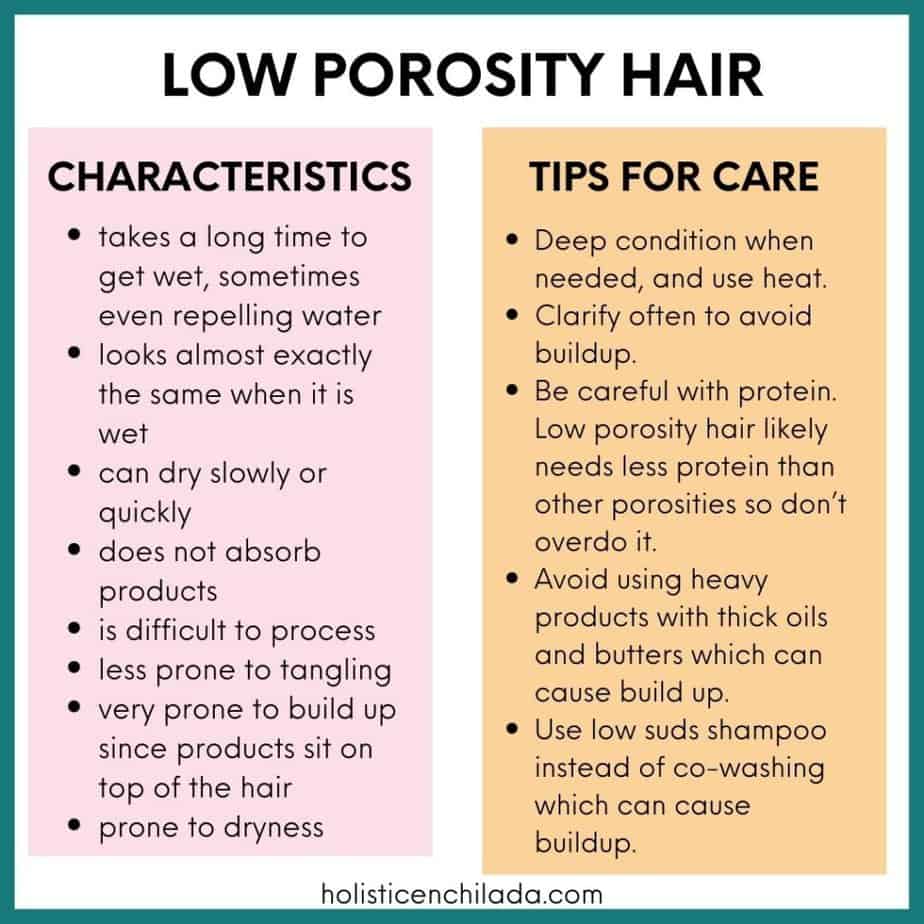
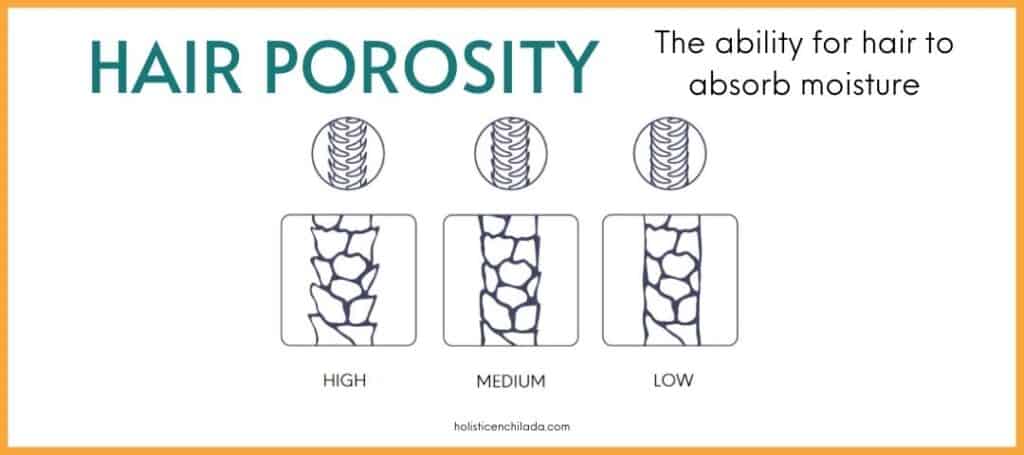
Low porosity hair has cuticle scales that lie flat and packed tightly together. Water and product have a hard time getting past them, so your hair beads water in the shower and takes a long time to soak through.
The flip side is that once moisture does get in, it stays. That’s why low porosity hair often looks smooth and shiny compared to higher porosity hair.
The two things that follow from this: buildup is your main enemy, and heavy products are working against you. Everything below comes back to those two.
Signs You Have Low Porosity Hair
- Water beads up on your hair, or takes a long time to soak through in the shower
- It takes a long time to air dry
- Hair feels smooth and looks shiny
- Products seem to sit on the surface instead of absorbing
- You get buildup easily
- Oils don’t seem to penetrate, they just coat
- Hair color doesn’t always take well
- Protein-heavy treatments leave your hair feeling stiff
If most of that sounds familiar, you are probably low porosity. If your hair soaks through almost instantly and dries fast, read about high porosity hair instead. If it sits somewhere in the middle, that’s medium porosity.
How To Check Your Porosity
The spray test
This is the one I’d use. Spray a section of clean, dry hair with room temperature water and watch what happens.
If you see visible beads sitting on the surface, or the water rolls off, that’s low porosity. If the hair darkens and saturates almost immediately, that’s high porosity. Somewhere in between is medium.
You can do the same thing in the shower without a spray bottle. Just pay attention to how long your hair takes to feel properly wet.
The float test, and why it’s not reliable
The float test is the most popular way people check porosity, and it’s the least reliable. You drop a clean strand into a glass of water and watch whether it sinks or floats.
The problem is that product residue, natural oils, water temperature, and how long the strand has been sitting all change the result. Plenty of people get a result that doesn’t match how their hair actually behaves.
If you want to try it anyway: trim a few strands of clean, product-free hair and drop them into a glass of room temperature water. Floating on top suggests low porosity. Sinking fast suggests high. Slow sinking suggests medium.
Test strands from a few different areas of your head, since the top of your scalp gets more sun and longer hair has had more time to take damage. If your hair is long, cut the strands into pieces so you can compare roots to ends.
Whatever result you get, check it against the signs above. If the two disagree, trust the signs.
What Causes Low Porosity Hair
Low porosity is usually genetic. It’s how your cuticle grows, not something that happened to your hair.
That’s the opposite of high porosity, which is often caused by damage: color, bleach, heat styling, sun exposure, or rough handling. Those things open the cuticle up. Nothing much closes it back down.
Straight hair tends to be less porous than curly hair, since the bends and twists along a curly strand create more places for the cuticle to lift.
Can you change it?
Not really, and you don’t need to. No porosity is better than another. They just need different routines.
Hair can become more porous through damage, so the thing worth protecting is what you already have. Going the other direction is much harder.
How To Care for Low Porosity Hair
Six principles. Everything else is detail.
Clarify regularly
This is the one that changes the most for the most people. Product, hard water minerals, and your own scalp oils build up on the surface of low porosity hair, and that layer blocks everything you apply afterward.
Use a clarifying shampoo regularly. I need one weekly on my own fine low porosity hair, though once or twice a month is enough for a lot of people. If yours feels coated, limp, or like products stopped working, buildup is usually the reason.
Use warm water, not cold
Warm water helps lift the cuticle so moisture can get in. Cold rinses are advice aimed at high porosity hair that needs to seal. Yours needs the opposite.
Not hot. Warm.
Add heat to deep conditioning
A deep conditioner sitting on closed cuticles mostly stays on the surface. Warmth is what gets it in. A hair steamer works best, but a hooded dryer, a thermal cap, or just the steam from your shower all help.
If your hair isn’t dry or damaged, you may not need to deep condition at all. I don’t.

Go lighter than you think
Dryness makes people reach for rich creams and thick butters, and those are exactly what a closed cuticle can’t absorb. They sit on top and become the buildup problem from the first point.
Lightweight, water-based products absorb better. Layering two thin things beats one heavy thing.
Apply to soaking wet hair
Not damp. Soaking. Water helps carry product into the strand, and on low porosity hair you want every assist you can get.
Keep a little protein in the rotation
Low porosity hair needs less protein than high porosity hair, but it still needs some. Skip it entirely and hair can go soft and mushy, which is hygral fatigue.
Small amounts, occasionally. Large protein treatments every week will leave it stiff.
Where To Go Next
Now that you know what you’re working with, these go deeper on each piece:
- Best low porosity hair products + ingredients to avoid for the full product list and the ingredients that cause buildup
- The best shampoos for low porosity hair
- The best deep conditioners for low porosity hair
- The best oils for low porosity hair, including which ones penetrate and which only sit on top

FAQs
Is low porosity hair healthy?
It’s neither healthier nor less healthy than other porosities. Low porosity often means your hair hasn’t been through much chemical or heat damage, which is a good sign. It also means moisture is harder to get in, so it can go dry and brittle if you neglect it.
How often should you wash low porosity hair?
Once or twice a week suits most people, with a clarifying wash in the rotation. Going too long between washes lets buildup accumulate, which is the last thing this hair type needs. Adjust based on your scalp and how much product you use.
Is honey good for low porosity hair?
Yes. Honey is a humectant, meaning it attracts moisture to the strand, and that’s useful when your cuticle isn’t letting much through on its own.
Can low porosity hair be frizzy?
It can, though it’s less prone to frizz than high porosity hair. Flat cuticles reflect light and lie smooth, so frizz usually shows up here from damage, dryness, or buildup rather than from porosity itself.
Should you rinse low porosity hair with cold water?
No. Cold water closes the cuticle, and yours is already closed. Warm water helps open it enough to let moisture in. Think of it the same way you’d think about adding heat to a deep conditioner.
Is low porosity hair harder to grow?
Length retention can be harder if the hair is dry and breaking, but porosity doesn’t change how fast hair grows from the scalp. Keep it moisturized and handle it gently and length comes.
Can you have low porosity hair with curly or coily hair?
Yes. Porosity and curl pattern are separate things. Curly and coily hair does tend toward higher porosity because of the bends along each strand, but plenty of curly people are low porosity. Take my curly hair type quiz if you’re not sure about your curl pattern.
Are sulfates bad for low porosity hair?
Strong sulfates like sodium lauryl sulfate are drying, and low porosity hair struggles to replace lost moisture. That said, you do need real cleansing power to handle buildup. A gentle clarifying shampoo is a better answer than avoiding all sulfates and letting buildup pile up.
The Bottom Line
Low porosity hair is not dry hair that needs more moisture piled on. It’s hair that can’t get moisture in through the front door.
Clear the buildup, use warmth to open the cuticle, and keep the products light enough to actually pass through. That order matters more than any single product you buy.