Polymers in Hair Products: What do they do?

This post may contain affiliate links, and I will earn a commission if you purchase through these links. Please read the disclosure policy for more details.
Every curly girl has a selection of hair care products in her bathroom, from shampoos and conditioners to curl creams and hair spray. But have you ever looked at the ingredient list on your favorite product and wondered what some of them actually do?
All the products I mentioned above contain polymers, a versatile group of ingredients that help your products achieve their desired effect.
In this guide, I’ll explain what polymers are and how they are used in hair care products to help you achieve gorgeous, healthy hair.
What are Polymers?
Polymers are defined as “Any of numerous natural and synthetic compounds of usually high molecular weight consisting of up to millions of repeated linked units, each a relatively light and simple molecule.”1
The word polymer is based on the Greek words “poly,” meaning many, and “mer,” meaning units.
Polymers are large molecules made of chains of smaller units called monomers that are chemically bonded together. If the chain contains a single type of molecule, it’s known as a homopolymer, and if it is made up of units containing two or three types of molecule, it’s called a copolymer.
Hair care products often use synthetic polymers in their formulations, but polymers are also found in nature. Protein is a polymer made up of chains of amino acids, which means human hair fibers are made of a natural polymer – keratin.
Their strong chemical structure allows polymers to be used in a wide range of different products. For example, they can strengthen airplane materials and bullet-proof glass or create a dissolvable coating on time-release pain relief tablets.
Polymers also feature on the ingredient lists of a wide range of personal care products, beauty products, and hair care products.
Why are Polymers in Hair Products?
In hair care products, polymers can help make the product more stable or give it a better consistency that’s more pleasant to use. Hair treatment products without polymers would have a thin, runny consistency or a layer of oil sitting on top of the water below.
The use of polymers in hair care formulations has several benefits depending on the exact polymers chosen. They can:
- Improve hair conditioning for softer hair
- Give hair slip to make combing and detangling easier
- Help increase hold to make your style last longer
- Help strengthen your hair fiber to reduce breakage
- Stop oil and water products from separating
- Make the product feel nicer to apply
What are the Negatives of Polymers in Hair Care Products?
Although there are many benefits of polymers in hair care products, there’s also a downside. Your regular shampoo can’t dissolve some polymers, so over time they can build up on the surface of the hair.
This coating prevents your strands from absorbing moisture and nutrients, making your hair dry and dull.
You can stop this happening by using a clarifying shampoo like Malibu C Un-Do-Goo on a regular basis. Look for olefin sulfonate on the ingredient list of your clarifying shampoo, as this is highly effective at dissolving polymer buildup.
You could need to clarify your hair once a week or once a month, depending on how much buildup you have,. This will help prevent your strands from becoming limp and lifeless.
Common types of Polymers in Hair Products
You’ll find a range of polymers in hair products, carrying out a variety of essential tasks to help your hair look its best.
Here are some of the most common polymers you’ll see in the ingredient lists on your hair product packaging:
Conditioning polymers
Cationic polymers are probably the most common polymers in hair care products, as they have excellent conditioning properties. These polymers carry a positive charge, which helps them bind to the negatively charged hair shaft.
The attraction between the polymer and hair strand makes it more difficult for water to rinse the product off the hair surface. It also makes the scales of your hair cuticle lie flatter, giving your hair a smooth, shiny appearance, and helps make combing easier.
The most common cationic polymers in conditioning hair treatments include guar hydroxypropyltrimonium chloride (GHPTC) and several polyquaterniums like polyquaternium-6, polyquaternium-7, polyquaternium-10, and polyquaternium-11.
Silicone Polymers
Like cationic polymers, a silicone polymer is a synthetic ingredient often used to improve the condition of your hair.
Silicone polymers are water-insoluble and strongly hydrophobic, which means they repel water. They’re often used in hair care products to provide hair slip that makes detangling easier, add moisture to improve your hair’s condition, or create a protective barrier that protects the hair shaft from heat damage.
However, silicones can easily build up on the surface of hair strands, as they won’t dissolve easily with regular shampoos. This buildup can make it harder for your hair to absorb moisture or nutrients, leaving it limp and dull.
To avoid this problem, you should regularly clarify with a shampoo containing olefin sulfonate, like Malibu C Un-Do-Goo. This will break down the silicone buildup and leave your hair squeaky clean.
Examples of silicone polymers include dimethicone, cyclomethicone, and pentasiloxane.
Viscosity modifiers
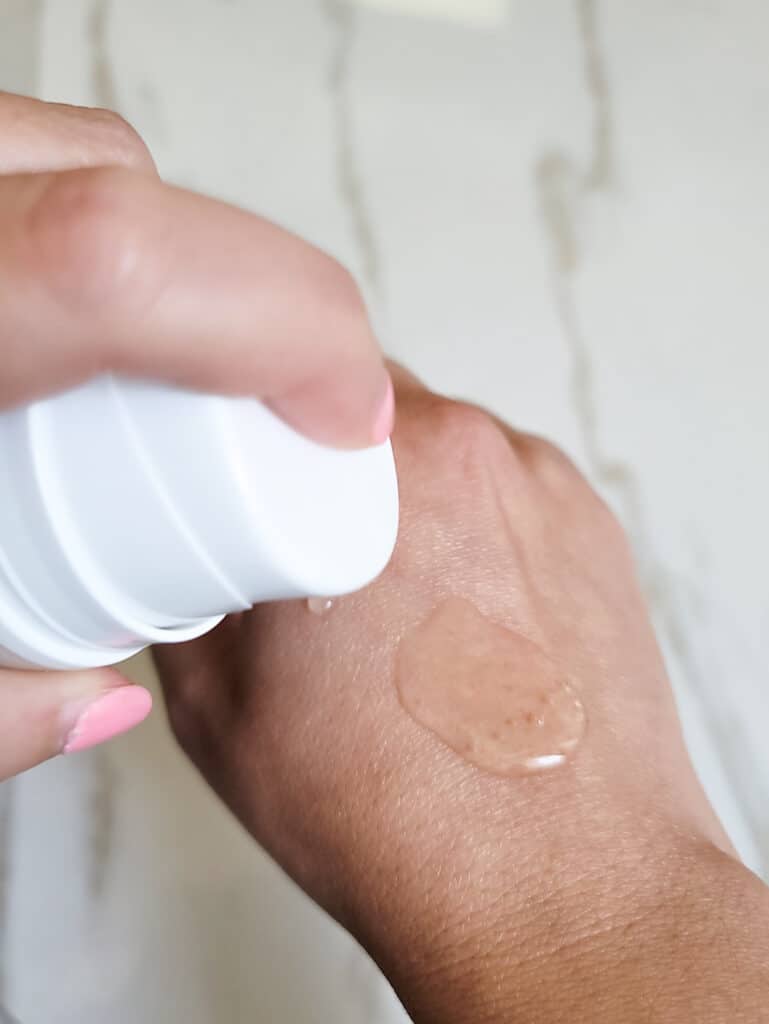
Viscosity-modifying polymers help to give your shampoo and hair conditioner a more pleasant consistency. Without these polymers, the product would have a thin consistency that runs between your fingers as you apply it. These viscosity modifiers also help stabilize the oil-in-water emulsion that features in a lot of hair products.
Examples of synthetic viscosity-modifying polymers include hydroxyethylcellulose, hydroxypropylmethylcellulose, and carboxymethyl hydroxyethylcellulose.
Some brands also use natural polymers like guar gum or xanthan gum to thicken the consistency of hair products. These natural ingredients have long polymeric chains of sugar molecules and will enhance the product’s physical properties.
Stabilizing Polymers
Stabilizing polymers are another group of ingredients that help improve the consistency of hair care products. Stabilizing polymers help emulsify the oil and water in products such as hair conditioner or curl cream.
Oils don’t easily mix with water and can form a separate layer on top of the product. Adding a stabilizing polymer helps create a stable, creamy consistency that doesn’t separate as easily.
Examples of stabilizing polymers include beheneth-25 methacrylate copolymer and polymer TR-1.
Styling Polymers
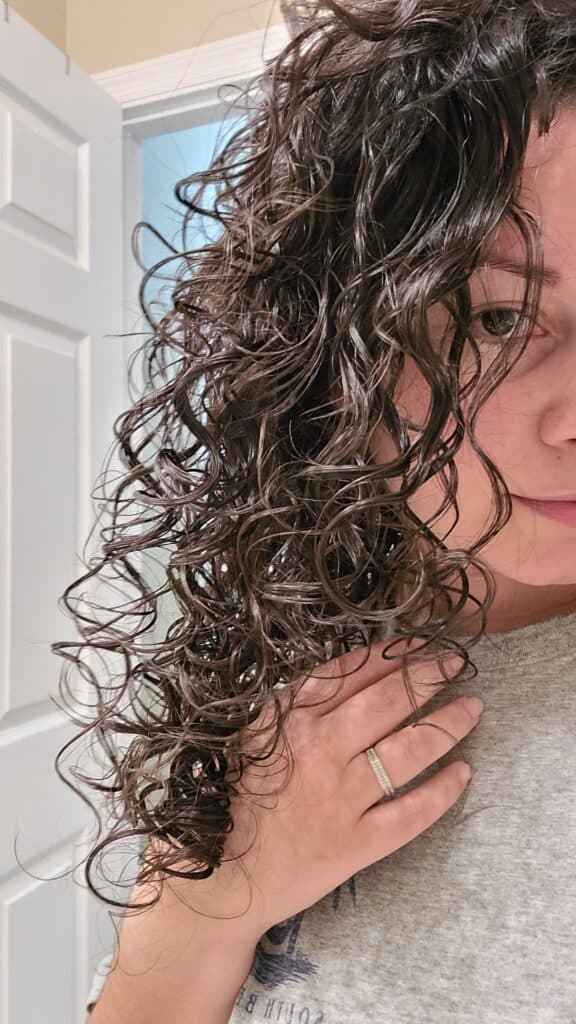
Styling polymers, or film-forming polymers, are used in almost every styling product. They dry quickly to form a clear protective film around the hair shaft. This sets the hair in your desired style and shields it from high humidity, helping with curl retention.
Early film formers like PVP (poly N-vinyl-2-pyrrolidone) would flake off the hair strand once they were dry and struggled to keep their shape in humid conditions. Modern styling polymers can maintain a style even in humid weather and give you flake-free styling.
Common styling polymers in hair styling products include PVP/VA (an improved version of PVP), polyquaternium-55, and polyquaternium-69.
PEG-modified polymers
PEG is short for polyethylene glycol, a water-soluble polymer that can be combined with a variety of other ingredients to form a humectant, an emulsifier, or a surfactant, among other uses.
Examples include PEG-10 sorbitan laurate, PEG-100 castor oil, and PEG-150 distearate. The number indicates how many PEG repeat units are present, and polymers with higher numbers are more water-soluble2.
FAQs
If you still have questions about polymers in hair products, these answers might help:
What are polymers in hair products?
Synthetic polymers are ingredients used in hair products like hair gels, hair sprays, and mousses for a range of reasons. For instance, some polymers create stronger styling hold, some give your hair extra shine, and others help stabilize the product for a more pleasant consistency.
Are silicone polymers bad for hair?
Although silicones can give you smoother, shinier hair, they can also cause a buildup on your strands. This product buildup can make it harder for curly hair to absorb moisture and nutrients, and needs to be removed with a clarifying shampoo.
Is hair gel a polymer?
Hair gel itself isn’t a polymer, but it contains polymers that create its sticky consistency and provide hold.
The Bottom Line
Polymers are present in everything from car tires to cosmetic products and even occur naturally in substances like hair fibers and diamonds. They also give our hair care products some of their most important qualities, helping to condition your hair or give your style greater longevity.
Although polymers aren’t generally harmful to your tresses, some polymers can cause a buildup on your strands that will leave your hair dry and lifeless. Using a clarifying shampoo regularly will help remove this buildup so your hair looks its best.
You don’t need to know exactly how the polymers in your hair conditioner or hair spray work. But it’s good to know that having them there improves the effectiveness of these products and helps you achieve your hair goals.
References
1: https://depts.washington.edu/matseed/mse_resources/Webpage/Biomaterials/definitions1.htm
2: https://www.cd-bioparticles.com/support/polyethylene-glycol-peg-modification.html